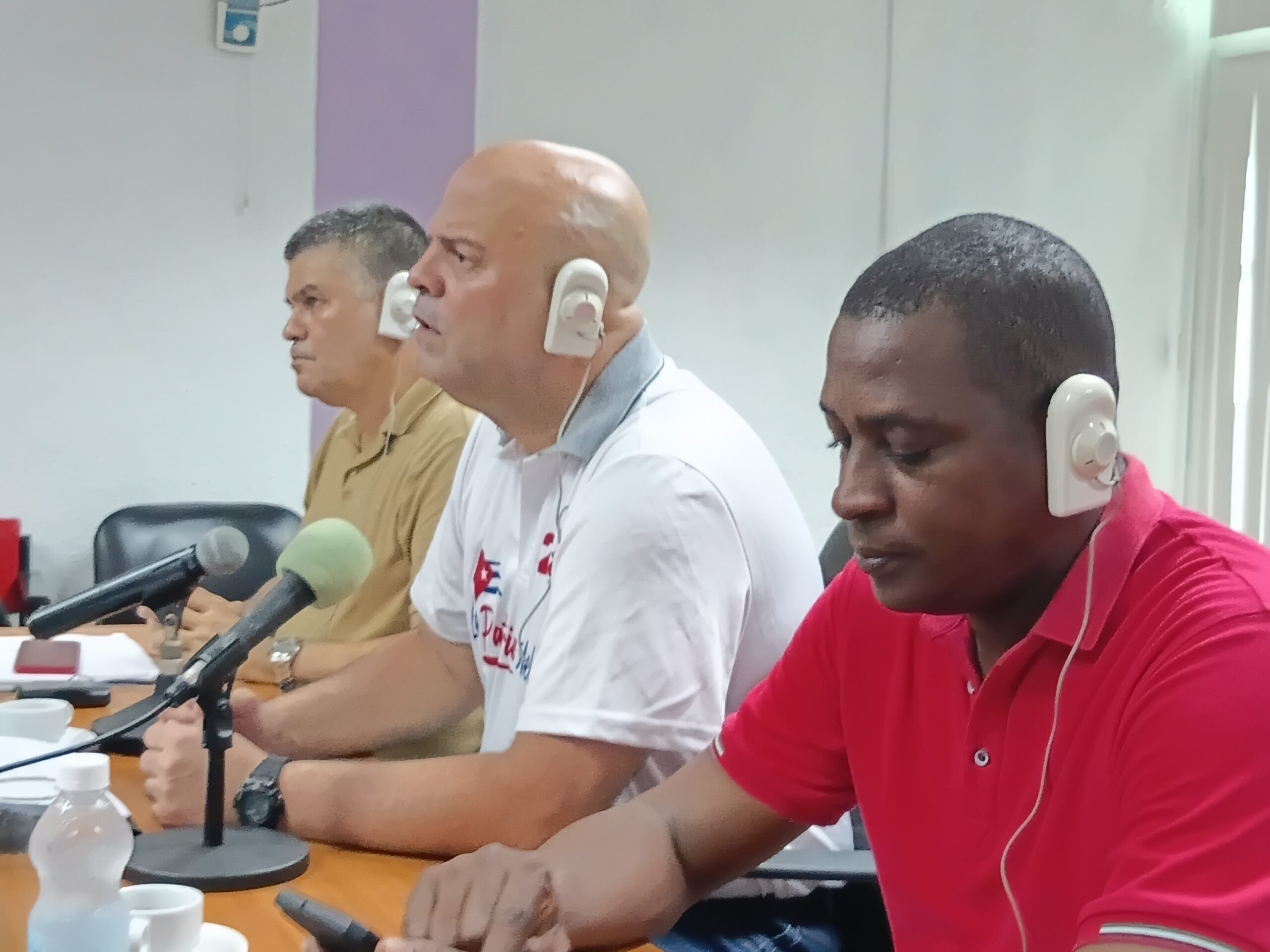
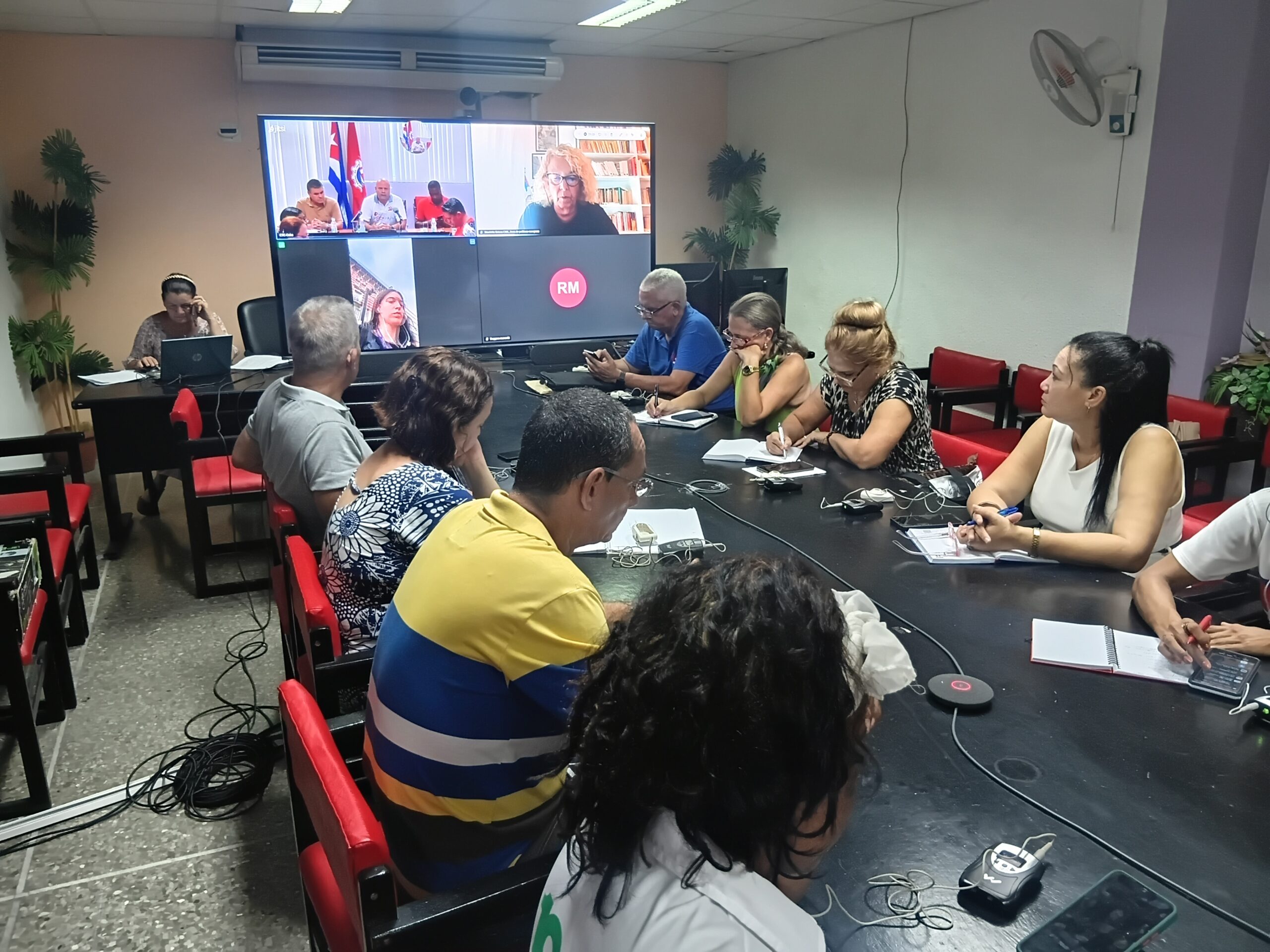
The backing of more than a hundred union and professional organizations from the Americas, Europe, and Asia for Cuba’s fight against the blockade was reaffirmed as the debate and voting in the United Nations General Assembly approached regarding the Island’s report on the brutal consequences of the imperial siege.
Photo: Taken from CTC video conference
Through videoconferences with various geographic regions, member of the Central Committee of the Party and Secretary General of the Central Workers’ Union of Cuba (CTC), Osnay Miguel Colina Rodríguez, urged their representatives to promote a favorable vote from the governments of their countries on the Cuban resolution to reiterate the majority rejection of the genocidal act.
“To support, as the world has repeatedly done once again, the right of the Cuban people to live in peace, the right of the Cuban people to decide for themselves, the right of the Cuban people to development, the right of the Cuban people to life,” he emphasized.
The resolution A/Res/80/4 titled «Need to end the economic, commercial, and financial blockade imposed by the United States of America against Cuba» will be debated and voted on in the United Nations General Assembly on the upcoming days of October 27 and 28.
Colina Rodríguez pointed out to the videoconference participants that the blockade has intensified this year as never before, with an energy siege and secondary sanctions aimed at causing maximum suffering to the people of the Island.
He asserted that it is an inhumane collective punishment and exemplified that “Cuba achieved an 85 percent survival rate in cancer diseases due to treatments, and today, unfortunately, lacking all the medications, lacking all the treatment, this survival rate has fallen to 69 percent.”
“Cuba managed to reduce infant mortality to below 5, even approaching 4 per thousand live births, and today shows indicators of 9.9,” he added.
The top Cuban union leader emphasized that the Caribbean nation is not a threat.
He recalled that last July, the United Nations General Assembly approved, with 136 votes in favor and 9 against, a debate to end the blockade after the U.S. attempts to prevent it failed.
Voices of solidarity from around the world
Among the more than a hundred union and professional organizations from Asia, Europe, and the Americas that participated in the videoconferences was Keisuke Fuse, Deputy Secretary General of the National Confederation of Trade Unions of Japan, who called the blockade a flagrant violation of the human rights of Cubans.
Photo: Taken from CTC video conference
“Japan has supported the Cuban resolution since 1997 and has not changed that position. We hope that the current government of my country will once again support it in the United Nations General Assembly at the end of October,” he commented.
For her part, Nicoletta Grieco, from the Italian General Confederation of Labor (CGIL), referred to the recent visit to Havana by MEPs, national parliament members, activists, and trade unionists from her nation, who brought solidarity aid to public institutions in the capital, as an expression of traditional Italian support for the Island, which she assured would also be manifest at the UN on October 28.
Similarly, Juan Francisco Jara Mena, president of the National Confederation of Construction Workers of Chile; Mark Friedman, from the «Hands Off Cuba» Committee in Los Angeles, United States; and Omar Brito, on behalf of the Socialist Bolivarian Workers’ Central and the Latin American Construction Federation, condemned the Yankee siege on the Island and demanded its removal from the illegal list of State Sponsors of Terrorism.
Argentine trade unionist Mariano Vázquez rejected the servile alignment of Javier Milei’s government to the U.S. policy against Cuba and reaffirmed the support and solidarity of the people and workers of the Río de la Plata with the homeland of Fidel Castro Ruz and the adoptive homeland of Commander Ernesto Che Guevara.
On October 27 and 28, the General Assembly of the United Nations will debate and vote for the thirty-fourth time on the Cuban resolution demanding an end to the nearly 65-year blockade.
Last year, the highest deliberative body of the UN overwhelmingly rejected the economic blockade that the United States has imposed on the Caribbean country since 1962. The resolution received 165 votes in favor, 7 against, and 12 abstentions.




 Cargando...