



 Cargando...
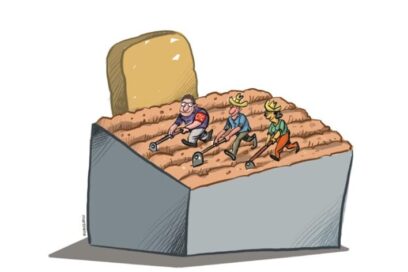
Union sections have a leading role in workers’ meetings with managers, ensuring that work visits become spaces for constructive dialogue and the search for solutions.
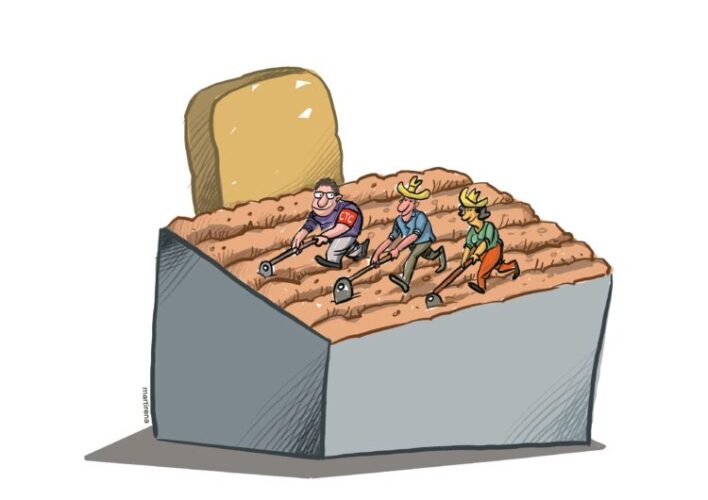
Now that, in extraordinary plenary sessions of the provincial Party committees, the First Secretary of the Central Committee of the Party, Miguel Díaz-Canel Bermúdez, has insisted on applying a management style closer to the field, this is the opportunity to align those actions with union missions.
In other countries, such practice is known as itinerant management, in which administration is not limited to a fixed place. Leaders interact directly, fostering more effective communication and a better understanding of workers’ needs and challenges.
The labor movement can prepare members to create an agenda of topics in specific workplaces, avoiding stagnation in complaints, and instead receiving managers with collective proposals to be processed at higher levels or in other entities.
The voice of workers in such grassroots exchanges is strengthened by union participation before, during, and after visits, since these are occasions when the union can demand tangible results.
In cases where problems are not resolved due to external obstacles, the [su_tooltip title=»Central de Trabajadores de Cuba (CTC)» text=»The CTC (Workers’ Central Union of Cuba) was founded on January 28, 1939 by Lázaro Peña under the name Confederación de Trabajadores de Cuba (Confederation of Cuban Workers)» background=»#fa9800″]CTC[/su_tooltip] and unions can help collect and analyze data so that members can participate in these acts, which are not mere formalities.
“Officials must spend more time in the field,” said the President, referring to the importance of learning from workers’ experiences, which requires both visitors and those visited to change their mindset.
It is not enough to leave the offices; bureaucratic approaches must be shed in order to directly gather information in workplaces, foster relationships with workers, and avoid visits being seen as traditional supervision.
It is also essential to avoid the demand that visits be unexpected (there may be some, but these are not the focus), as this prevents preparation to present issues that visitors must manage at higher levels or in other entities.
The union organization must ensure that these meetings are not or do not feel invasive, but rather are timely, promote collaboration, and play a fundamental role in feedback.
Those receiving the visit must also prepare and learn to establish direct contact, achieve open and proactive communication when presenting situations, reporting problems, and contributing ideas clearly.
This is a method to strengthen ties with the grassroots, where union sections must document meetings to demand resolution of unresolved cases and monitor agreements or instructions.
Although there are no single recipes, it is advisable for each member to organize brief notes with key topics from their workplace and make the necessary consultations to support their arguments.
Ultimately, spending more time in the field not only means visiting workshops or factories, hospitals, schools, and communities, but also tuning in to real working life, where initiatives and everyday challenges arise.
If the union helps turn each visit into an exercise in mutual learning and practical transformation, progress will be made toward more participatory, fair, and results-oriented management—aligned with what the country needs.
Acerca del autor
Licenciado en Periodismo y licenciado en Ciencias Sociales, autor de El Foro en Cubahora, jubilado y reincorporado en la Redacción Digital de Trabajadores, donde escribe las secciones LA GUAGUA y EN 500 CARACTERES, fue corresponsal del periódico Vanguardia en tres de las seis regiones de Las Villas, Jefe de Redacción fundador del periódico Escambray, Corresponsal Jefe de la Agencia de Información Nacional (actual ACN) en Sancti Spiritus, colaborador de Radio Progreso, Prensa Latina y Radio Sancti Spíritus; así como Jefe de Información, Subdirector y Director del periódico Vanguardia, donde administró sus foros de discusión.
