




 Cargando...
Artificial intelligence (AI) is no longer just a technological promise. It is now present in offices, factories, businesses, services, media, and digital platforms. Its expansion is reshaping work organization and the content of many occupations. AI automates tasks, processes large volumes of information, and performs in seconds what once required hours of human effort.

It is true that change opens up a vast range of opportunities, but it also raises a central problem: what will happen to workers when a company can achieve the same results with fewer people?
The International Labour Organization (ILO) estimates that one in four employees works in occupations with some degree of exposure to generative AI; although it is more likely that these jobs will be transformed rather than disappear completely.
Once again, technology sets the pace of change. Just as happened with the steam engine in its time, nothing will be the same after AI.
Fewer Jobs, New Occupations
Despite the risks, experts state that automation does not need to eliminate an entire profession to reduce employment. It is enough for a significant portion of its tasks to be carried out by intelligent systems.
For example:
- An administrative department may require fewer employees to fulfill its duties efficiently.
- A customer service center can automate a large part of its responses.
- A company may use AI to draft documents, analyze data, or generate content that previously required entire teams.
The World Economic Forum estimates that, as a result of economic and technological transformations, by 2030 around 170 million jobs could be created while 92 million are displaced. The overall balance would be positive, but that does not mean that those who lose their jobs can automatically occupy the new ones.
The jobs that disappear and those that emerge do not necessarily demand the same skills, are not located in the same regions, nor do they offer equal wages or conditions. Therefore, speaking of a positive balance of jobs may conceal a much more complex reality: millions of workers will have to adapt to changes for which not everyone will have equal opportunity.
Working Faster
The threat doesn’t end with jobs that may disappear. Artificial intelligence can also reshape the intensity of work. A tool that cuts task time in half might seem like an opportunity to rest, shorten the workday, or take on higher‑value activities. But it can just as easily have the opposite effect.
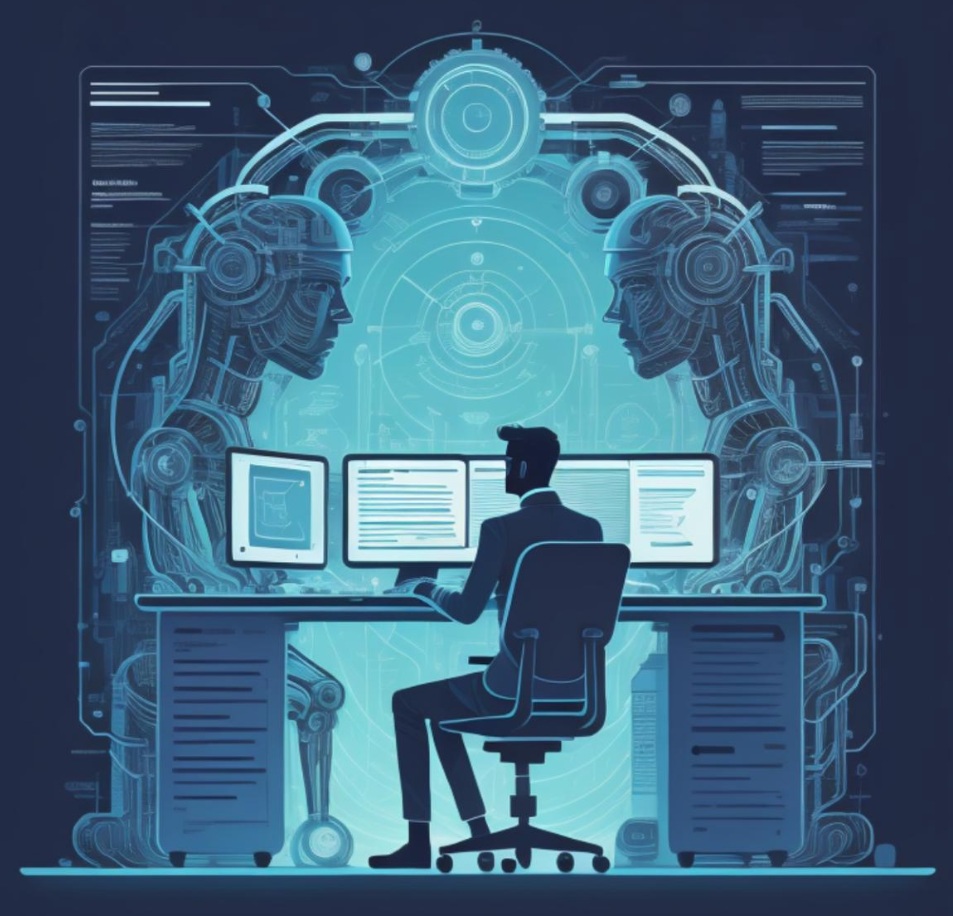
The worker doesn’t necessarily put in more hours; instead, they are pushed to work at greater speed, with fewer breaks, and under constant pressure to meet ever‑increasing targets.
It’s no coincidence that the OECD has warned about rising work intensity, extensive data collection, and inequality in workplaces where AI is used.
Adding to this is the permanent availability fostered by digital technologies. When a tool allows someone to respond, produce, or supervise at any time, the risk grows that the boundaries between working hours and personal time will become increasingly blurred.
The Algorithm as Decision‑Maker
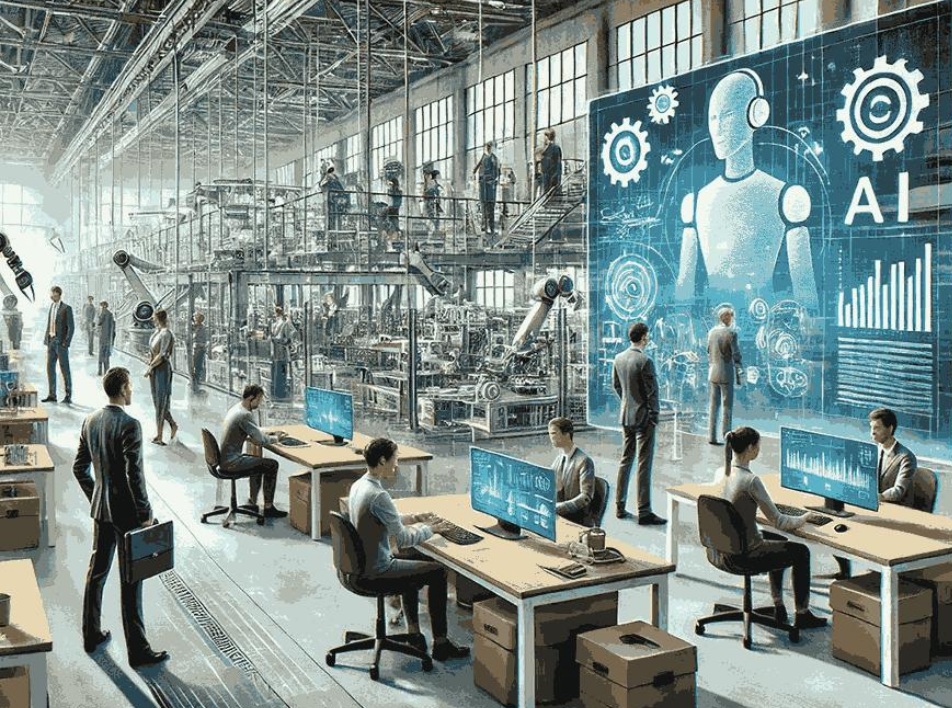
AI is also entering a particularly sensitive area: workforce management. Automated systems can distribute tasks, set priorities, measure results, select candidates, or evaluate performance.
This introduces a new form of workplace power: decisions once made by a person may now be determined by a technological system whose functioning the worker does not understand.
The new “decision‑maker” lacks, for example, feelings such as empathy—something that, for better or worse, has shaped human relationships until now.
Essential questions arise:
- What criteria does the algorithm use?
- What information does it collect?
- Can the worker know and challenge an automated evaluation?
- Who is accountable when the system makes a mistake?
This so‑called algorithmic management requires updating labor rights that were conceived for a very different organization of work.
Greater Challenge for the Global South
The transformation will not have the same effects in all countries. Economies with stronger digital infrastructure, scientific capacity, and access to capital are better positioned to harness the productivity associated with AI. Many nations in the Global South, however, face technological, educational, and financial limitations.
The digital divide will widen the labor divide. For less developed countries, the challenge of incorporating AI goes beyond simply adopting new technologies. It is necessary to build their own capacities, train workers, and protect jobs during the transition.
Education and continuous training acquire strategic importance and cannot become an excuse to shift all responsibility onto workers. If a company introduces a technology that transforms an occupation, it must also take responsibility for training and relocating its staff.
What Role for Trade Unions?
Trade unions face a huge challenge. It is no longer about breaking work tools, as in the past. Now it is about participating in decision‑making that shapes the conditions under which technological development is introduced.
The first rule should be simple: no technological transformation that affects work can be excluded from collective bargaining.
Unions can:
- Demand prior information about the AI systems to be introduced and their possible effects on staff.
- Negotiate safeguards against technological layoffs, training and relocation plans, wage protection, and mechanisms to review automated decisions.
- Address working hours: if technology increases productivity, its benefits should not translate exclusively into higher corporate profits. They can be used to reduce working time, improve wages, expand training, and raise job quality.
- Set limits on digital surveillance and guarantee the right to know the criteria by which algorithms evaluate workers.
Therefore, collective bargaining must incorporate new issues: data, algorithms, privacy, surveillance, training, digital disconnection, and the fair distribution of productivity gains.
Progress for Whom?
History shows that major technological transformations can free humans from heavy tasks and greatly boost productivity. It also teaches that their benefits are not automatically distributed.
AI can become a tool to work less and better. Or it can serve to produce more with fewer workers, subjecting those who remain to increasingly demanding rhythms. The difference will depend on the rules that are established. That is why the debate about artificial intelligence is not exclusively technological—it is also economic, political, and labor‑related.
The decisive question is not whether AI will replace certain tasks—it inevitably will. The issue is who bears the costs of that transformation and how the benefits are distributed. Experience has already shown that in this struggle, workers and their organizations cannot remain mere spectators.
Jobs Under Pressure from AI
Here’s a clear breakdown of the occupations most exposed to automation and AI systems, where routine or standardized tasks are increasingly being replaced or reshaped:
- Data entry and processing: typists, database operators, and administrative assistants.
- Cashiers and ticket clerks: payment functions, ticket issuance, and automated customer service.
- Bank employees: routine counter operations and transaction processing.
- Secretaries and administrative assistants: managing schedules, documents, emails, and procedures.
- Postal workers: sorting and processing correspondence.
- Accountants and auditors: especially routine tasks of record‑keeping, reconciliation, and document analysis.
- Customer service agents: standardized queries handled by virtual assistants.
- Translators and basic content writers: production and translation of standardized texts.
- Digital designers and content producers: certain tasks of creating, editing, and adapting images, audio, and video.
- Programmers in routine tasks: code generation, review, and documentation in less complex projects.
