



 Cargando...
It was the first month after the revolutionary victory of 1959. In Matanzas, a group of sugar workers went to the regiment commanded by William Gálvez to complain that the administrators of several sugar mills had not reinstated employees who had been dismissed for political reasons. The administrators were summoned to the regiment; some came, the situation was discussed, and it was resolved.
The administrator of the Tinguaro mill in Colón refused to appear. When they went to find him, he had hidden, and instead the officer sent was received by none other than the mill’s owner, Julio Lobo, known as the Sugar Czar, possessor of a millionaire fortune and owner of more than a dozen mills, among other properties.
Lobo said he had nothing to discuss with those who had summoned him, that he would speak with the President of the Republic. They insisted on the need to dialogue, telling him he could speak with whomever he wished, but to travel to the capital by car he had to pass through the regiment. Lobo continued saying he had nothing to discuss with them.
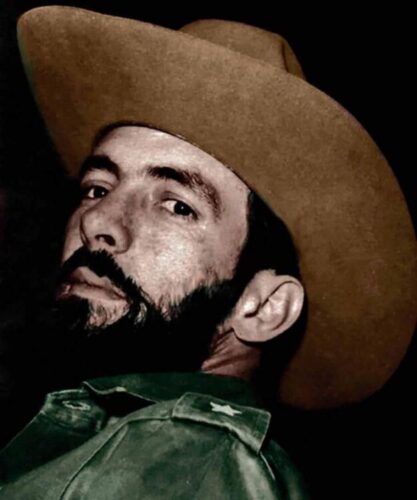
The next day Camilo arrived by plane at the regiment. With him came, among others, Sorí Marín (later a traitor), who at that time was Minister of Agriculture. False information was circulating that Lobo had been detained; Camilo asked why, and it was confirmed that it was not true.
Sorí Marín spoke by phone with the millionaire and asked him to wait, saying he did not need to bother going to Havana, that they would come to him to resolve the situation. Camilo told Sorí Marín: “Hey, it looks like part of the story is already a lie, since no one has detained this man.”
Sorí replied that Julio Lobo was a very important figure with major international sugar interests and could not be disturbed, to which Camilo retorted: “Well, that business of disturbing is relative, as long as it’s not him disturbing the Revolution.”
They arrived at Julio Lobo’s residence, where he received them with a smile. Sorí Marín went to greet him and embraced him. Then the group sat down, had coffee, and Sorí, anticipating Camilo, showered Lobo with apologies, calling the incident a bad moment caused by an irresponsible comrade. Camilo stood up and intervened to express his disagreement: “There is no irresponsibility here, but rather what seems to be a misunderstanding, conscious or unconscious. We were told that the gentleman was imprisoned and cut off by order of the regiment chief, and you have confirmed he is not. That is what he reported when he called Havana, and what he was told was simply to present himself at the regiment on his way to the capital, which are two different things. Furthermore, he did not recognize the provincial authority, with whom he could have spoken and explained the problem, so I think the apologies are unnecessary.”
Julio Lobo tried to ease the atmosphere and politely said: “I think what Commander Cienfuegos says is reasonable, but it seems I was misunderstood in what I explained by phone. I did not mean that I was locked up behind bars, but that to go to Havana I could not do so without first going through the regiment, so I thought I was considered cut off.”
After the reality of what had happened was explained again, Lobo agreed it had been a misunderstanding, saying that had he known his visitors he was sure they would have reached an agreement. “We’re glad you see it that way,” Camilo remarked.
The magnate invited them to breakfast, which Camilo declined, saying they needed to leave. Before departing, Lobo, who had spoken earlier about the modernization of his mills, wanted to take advantage of the opportunity to show one accompanied by a hero of the Revolution, at least from the outside since there was no time to go inside. But as soon as they arrived, people from the mill town gathered upon hearing of Camilo’s presence. Lobo tried to explain the advantages of his factory until the Commander asked about the workers’ living conditions.
Lobo immediately replied: “Commander, this mill and its town are a cup of gold.” A worker listening shot back: “Yes, a cup of gold for a small group, for the workers it’s a golden cage!”
The magnate was visibly shaken and invited Camilo to go elsewhere, but Camilo answered that he wanted to stay a while longer to talk with the people. In the exchange, the townspeople and workers told him about their problems and complained about the administrator, who, to make matters worse, wore the uniform of the tyrant’s army as an honorary officer.
On the way back, Camilo criticized Sorí Marín for his servility, and Lobo was left in a very poor light.
(Story taken from William Gálvez’s book Camilo Señor de la Vanguardia)
Acerca del autor

Graduada de Periodismo en 1974 y Master en Ciencias Políticas de
enfoque Sur, Al graduarse pasó a atender temas históricos e
ideológicos y viajó a varios de los antiguos países socialistas. Al
pasar al periódico Trabajadores, escribió para el Suplemento de
salud durante varios años y realizó la cobertura del segundo
contingente de la brigada médica en Guatemala. Posteriormente fue
jefa de la edición digital y subdirectora editorial hasta mayo de 2025
que se jubiló y se recontrató en la publicación. En el transcurso de
su ejercicio profesional Ha ganado premios en concursos
periodísticos y de humorismo.
