



 Cargando...
The theme “Characteristics of the Working Class in Our Era” brought together participants of the 1st Theoretical Union Symposium organized by the International Workers’ Institute, based in Athens, which aims to strengthen and promote Marxist thought among union leaders worldwide.
The virtual work sessions (via Zoom) took place on November 7 and 8, with around 20 guests from an equal number of countries. Representing Cuba was Dania Leyva Creagh, a researcher at the Institute of Philosophy of Cuba.
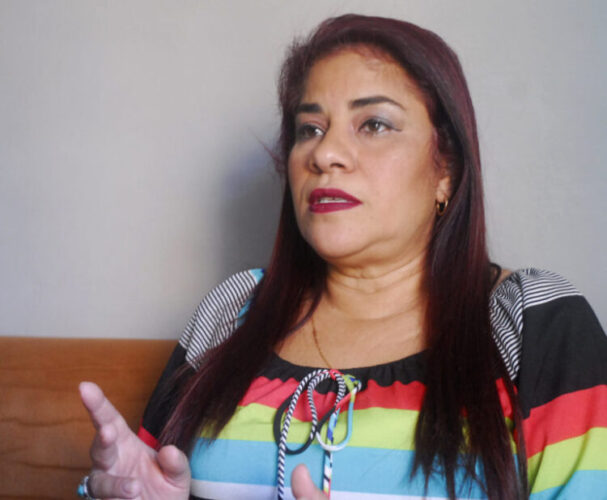
Leyva Creagh, also a representative of the Cuban Workers’ Central at the Executive Committee of the International Workers’ Institute, emphasized that understanding who today’s workers are, their challenges, and how they should organize “is an exercise in consciousness and political commitment that is indispensable.”
For Leyva Creagh, speaking of a classless society is no coincidence: “It is part of an ideological strategy aimed at erasing from the collective imagination the essential contradiction between labor and capital, thereby weakening class consciousness. But we know—and we confirm it in every workers’ struggle, in every factory, every school, and every neighborhood—that the division between those who produce wealth and those who appropriate it remains the structural axis of contemporary reality.”
“The working class has not disappeared,” she stressed. “On the contrary, it is growing, transforming, and diversifying. It is no longer composed solely of large industrial workers, but also of millions of service sector workers, technicians, IT specialists, platform workers, educators, healthcare workers, farmers, and employees who, through their daily efforts, sustain the social and economic life of the world.”
In a labor environment where temporary employment, outsourcing, digital platform work, and job insecurity are expanding as modern expressions of old injustices, the response must be the conscious unity of workers, regardless of occupation, gender, or nationality, she proposed.
“From Cuba’s experience, we know that only the unity of the working people, along with their political commitment and revolutionary consciousness, allows us to successfully face the toughest challenges. And we also know that the class-based union movement has a huge responsibility: to keep ideological clarity alive, to educate new generations in values of justice and cooperation, and to turn protest into project, organization, and hope.”
The Cuban academic highlighted that the advances achieved in science, technology, and human productivity could guarantee decent living conditions for all humanity: “However, the logic of capital turns that progress into inequality, exclusion, and destruction. That’s why our struggle is not just for better wages or working conditions; it’s a struggle for a different society, where wealth serves collective well-being and not private profit.”
“The role of institutions like the International Workers’ Institute is crucial,” she insisted. “It’s not enough to resist; we must also think, study, and educate ourselves, because the battle of ideas today is as decisive as the economic or political battle. Strengthening union education and ideological training is strengthening workers’ ability to transform reality.”
