



 Cargando...
The Workers’ Central Union of Cuba (CTC) is holding assemblies throughout September to present and approve the 2027 Economic Plan and Budget in the country’s business and budget-funded sectors.
The process is in line with the idea expressed by First Secretary of the Party Central Committee and President of the Republic Miguel Díaz-Canel Bermúdez that these plans should be built from the grassroots up, with workers having both a voice and a vote. He made the call during the closing session of the CTC’s 22nd Congress on June 27 at Havana’s Convention Center.
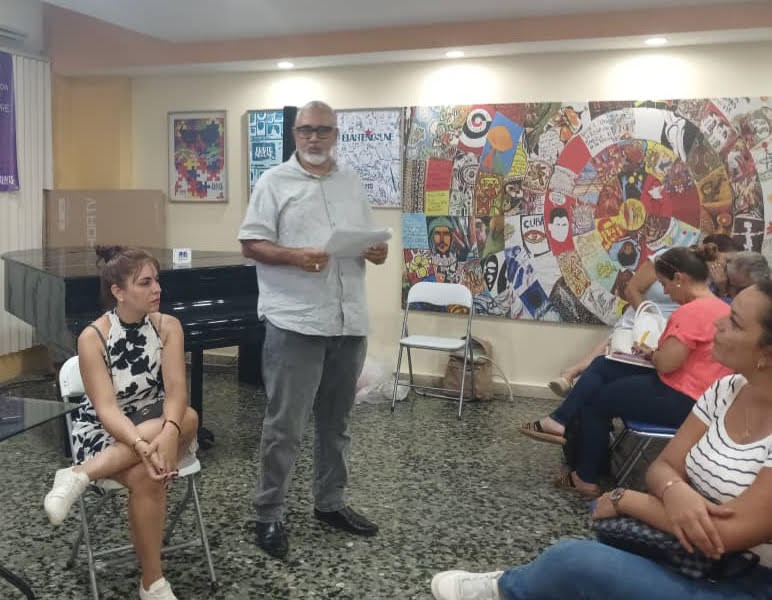
A representatives’ assembly held for this purpose at the Cuban Fund for Cultural Assets (FCBC) approved a 20 percent increase in the organization’s activity compared with the expected year-end result, despite the country’s complex economic situation.
This means generating total revenues of nearly 7.4 billion pesos, higher than the approximately 6.118 billion pesos the organization expects to actually achieve this year.
In 2026, the FCBC had a plan of around 7.95 billion pesos, but fulfilling it has become impossible due to Cuba’s complex economic situation, caused mainly by energy restrictions and secondary sanctions unlawfully imposed by the U.S. government to suffocate the national economy.
During the discussion, representatives emphasized the need to further strengthen ties with the approximately 3,000 creators and 460 artistic creation groups associated with the organization, taking advantage of the autonomy granted to state-owned enterprises under the approved economic and social transformations.
They also stressed the principle of providing higher compensation to those who contribute the most to fulfilling the plan, properly evaluating performance, ensuring adequate attention to workers, and advancing toward energy self-sufficiency through renewable sources to mitigate the effects of the energy restrictions imposed by the U.S. government.
The Cuban Fund for Cultural Assets has a presence throughout the country. It promotes and markets the work of visual and applied arts creators and provides import and export services to non-state forms of management.
Attending the assembly for the presentation and approval of the FCBC’s 2027 Economic Plan and Budget were Alfredo Vázquez Pérez, head of a department at the CTC national headquarters; Katia María Rodríguez Ramos, secretary-general of the National Union of Cultural Workers; and Martha Ivis Sánchez Ortiz, director-general of the FCBC.
