



 Cargando...
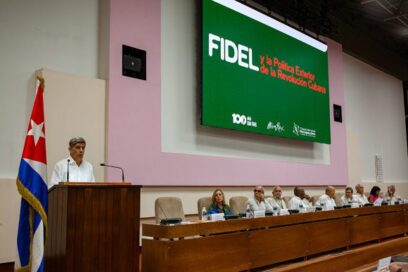
“Fidel was a Captain of his own soul,” summarized in one phrase Ralph Gonsalves, former Prime Minister of Saint Vincent and the Grenadines, capturing the human greatness of the Commander in Chief during the forum “Fidel and the Foreign Policy of the Cuban Revolution”, held on the second day of the First International Colloquium Fidel: Legacy and Future.
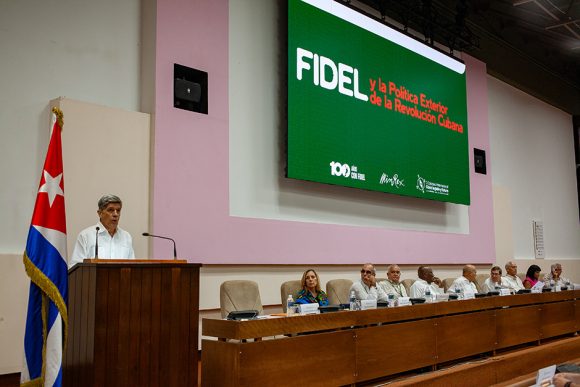
Through a video sent to the event, hosted at the Palace of Conventions, Gonsalves recounted how his friendship with Fidel began and the lessons he learned from him, as well as the internationalist and anti-imperialist thought that Fidel always defended not with words, but with actions.
This panel was preceded by the presentation of Deputy Foreign Minister Carlos Fernández de Cossío, who reviewed the teachings of the historic leader of the Cuban Revolution in guiding Cuban foreign policy. He cited as examples the events of the October Crisis or Missile Crisis of 1962, Cuba’s refusal to negotiate away its commitments to solidarity and internationalism, and its denunciation of the unjust international economic order.
The panel, moderated by Deputy Minister Josefina Vidal, included several emotional moments and featured Donald Ramotar, former President of the Cooperative Republic of Guyana; former South African Foreign Minister Nkosazana Dlamini-Zuma; José Luis Centella, President of the Communist Party of Spain; and Sacha Llorenti, former Executive Secretary of ALBA-TCP.
“Fidel belongs to the lineage of leaders who carried out permanent struggles against imperialist domination and became a symbol of nations defending their sovereignty against the challenges imposed by great powers. He understood that Cuba’s future was closely linked to the Caribbean,” highlighted Ramotar.
Reflecting on Fidel’s legacy, Dlamini-Zuma described him as one of the best teachers. “He taught us to invest in people. That the best investment is in people, in their education, in their health,” she affirmed.
The Spanish communist leader recalled Fidel’s words: “Fascism is the most complete expression of capitalist imperialist thought” and “it is the imperialist countries that create the conditions for the emergence and advance of fascism in the world.”
Finally, Sacha Llorenti reflected on the greatness of men like Fidel in the Americas, recalling that if Tupac Amaru was the greatest patriot of the continent in the 18th century and Bolívar in the 19th, “Fidel was without question and by a wide margin the greatest of the 20th.”
In addition to the panelists’ interventions, several virtual messages from political figures across the Americas were shown, including former presidents of Brazil, Dilma Rousseff; of Colombia, Ernesto Samper; of Ecuador, Rafael Correa; and former Prime Minister of Jamaica, Percival James Patterson.
Rousseff recalled being marked in her youth by Fidel’s courage and rebelliousness. “He taught us that the dignity of a people is not negotiable and that true foreign policy is not made with speeches, but with real expressions of solidarity. For my generation he was a living symbol of the struggle for social justice, freedom, and sovereignty,” she stated.
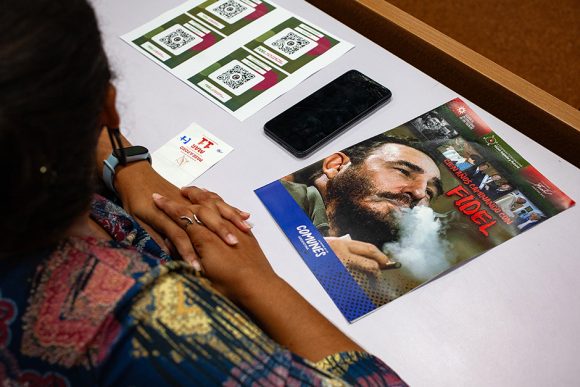
For his part, Correa emphasized the relevance of Fidel’s thought and revolutionary practice. He recounted how he met him in 2005 with the help of Venezuelan President Hugo Chávez, “when I was still unknown on the international stage, but already a candidate for the presidency of the Republic.”
He explained that although he only exchanged with Fidel on three occasions, “those experiences were unforgettable. He was an early, very early visionary of the environmental crisis, when no one took it seriously. His legacy is more alive than ever.”
Acerca del autor
Máster en Ciencias de la Comunicación. Director del Periódico Trabajadores desde el 1 de julio del 2024. Editor-jefe de la Redacción Deportiva desde 2007. Ha participado en coberturas periodísticas de Juegos Centroamericanos y del Caribe, Juegos Panamericanos, Juegos Olímpicos, Copa Intercontinental de Béisbol, Clásico Mundial de Béisbol, Campeonatos Mundiales de Judo, entre otras. Profesor del Instituto Internacional de Periodismo José Martí, en La Habana, Cuba.
