

Starting this Friday, with the entry into force of Decree 164/2026 concerning the organization of the wage system in the state business sector, the continuity of the country’s economic and social policies is consolidated, responding to the need to improve the system in state enterprises.

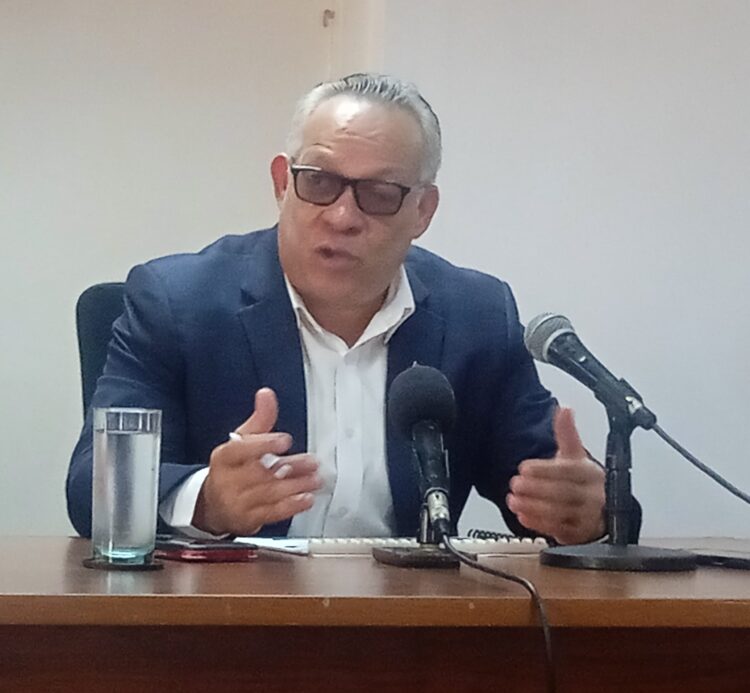
At a press conference, Jesús Otamendiz Campos, Minister of Labor and Social Security (MTSS in Spanish), and Guillermo Sarmientos Cabañas, Director of Wage Organization at the ministry, explained the new legal framework and emphasized the importance of granting state enterprises greater flexibility in managing human resources and defining wage schemes, always under principles of transparency and worker participation.
A Step Forward
The new framework replaces previous provisions (Decrees 53/21, 87/23, and 138/25) and is presented not as a rupture but as another step in the process of decentralization and autonomy of enterprises regarding wage organization, aimed at raising productivity, efficiency, and contributions to the State Budget. It applies to state enterprises, subsidiaries, 100% Cuban-owned commercial companies, and financial institutions within the national banking system.
“This decree seeks for state enterprises to operate under conditions similar to other economic actors, without abandoning their socialist character or strategic role in the national economy, with the goal of raising productivity levels, efficiency, and human resource management, directly linking economic results with workers’ incomes,” said the MTSS Wage Organization Director.
Otamendiz Campos explained that the socialist state enterprise is reaffirmed as a fundamental pillar of the national economy, now with greater autonomy in human resource management. He stressed that wage decentralization is decisive, with salaries negotiated directly with workers and unions, ensuring transparency and participation.
He also highlighted that wage levels will depend on each entity’s financial capacity, allowing efficiency to be rewarded fairly, ensuring equal rights and opportunities, and applying the principle of equal pay for work of equal complexity.
The regulation will apply to 2,570 business entities, including special budgeted units, benefiting more than 1,116,000 workers.
New Beginnings, New Challenges
The Decree introduces substantial changes. According to Sarmientos Cabañas, full decentralization now grants state enterprises the authority to define their wage system without external authorization, with worker participation as a mandatory requirement: all wage organization must be discussed in Workers’ Assemblies, agreed upon with unions, and incorporated into the Collective Bargaining Agreement.
It also brings greater flexibility in wage structures, eliminating limits and restrictions from the previous Decree 138. Each entity can design its wage fund according to its characteristics and needs. Regulation of maximum wages now falls under the National Institute of State Business Assets, with clear rules: up to 50% above the average in business groups and up to six times the lowest wage in individual enterprises.
The new framework also guarantees minimum protection for workers, setting that no income can be below 3,210 pesos, even in loss-making companies. More flexible remuneration modalities are introduced — basic salary, pay for results, and profit-sharing — directly linking individual contributions with compensation and future pensions.
Special treatment is foreseen for strategic enterprises that, despite operating at a loss, must retain their workforce, through funds approved by the Council of Ministers. Finally, the Decree extends its application to special budgeted units and self-financed entities that do not transform into enterprises, with specific adjustments, consolidating a fairer, more participatory wage system adapted to the diversity of economic actors in the country.
Otamendiz Campos emphasized that the principle “the more you contribute, the more you receive” becomes the distributive rule, linking results with income, and reaffirmed that no worker can earn less than the established national minimum wage. This consolidates a fairer and more flexible wage system that recognizes individual effort and guarantees social protection, while strengthening union participation and transparency in decision-making.

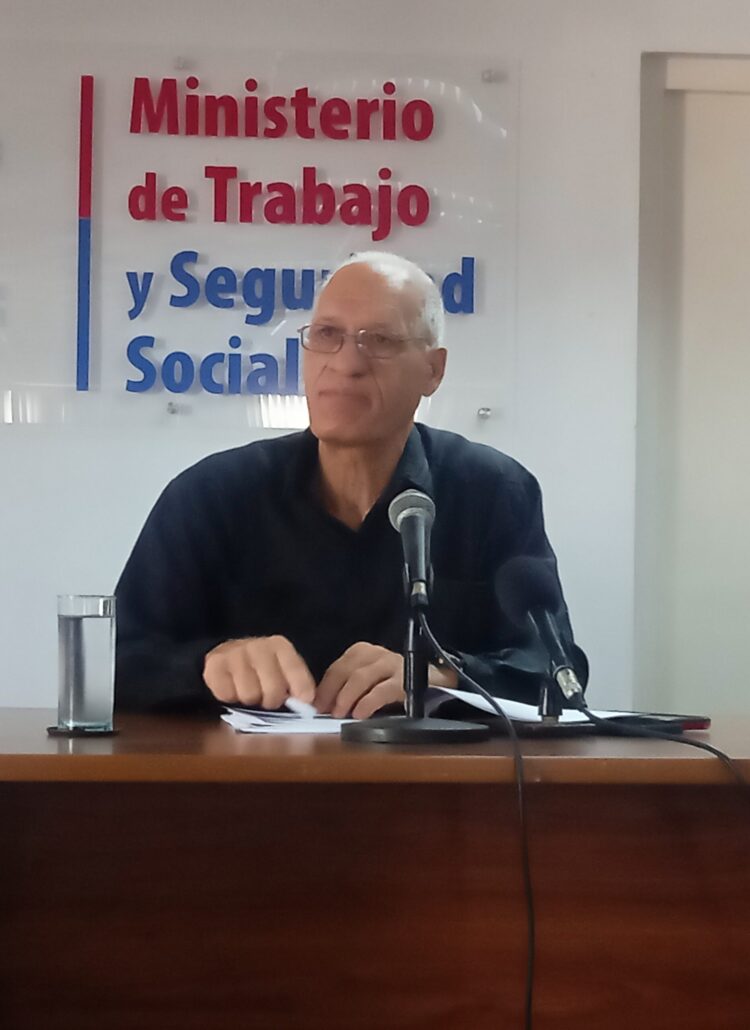
Other specifics relate to business autonomy. Wage Organization Director Guillermo Sarmientos Cabañas pointed out that state entities are empowered to define their wage organization without prior authorization. This eliminates selectivity in previous regulations and grants full autonomy, conditioned only by each company’s financial capacity.
This decree represents a significant advance in wage decentralization and state enterprise autonomy. Its strength lies in transparency, worker participation, and direct linkage between results and wages. However, it poses challenges: ensuring companies’ financial capacity, avoiding excessive inequalities, and guaranteeing that autonomy translates into real efficiency.
Looking ahead, it will be crucial to evaluate its impact on productivity and social equity.


