



 Cargando...
If banking in Cuba had been implemented respecting its original design, perhaps it would not be so questioned by much of the population, which recognizes the advantages and facilities it offers to natural persons and legal entities in financial relations.
It is worth recalling that when it was presented, the Central Bank of Cuba emphasized that it would be implemented gradually, as different institutions created the necessary material conditions, which of course include technological support, ATMs, and point‑of‑sale (POS) equipment.
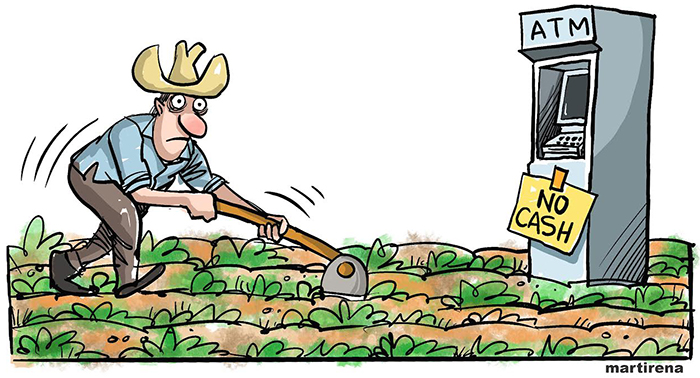
One of the most criticized aspects was the imposition of salaries on magnetic cards for sugar industry workers and other sectors with residences and jobs in remote areas, where commercial transactions are still carried out in cash.
I have participated in several debates on the subject, and those affected explained how this measure disrupted their way of life, work, and even their nerves. To access their salary, they must leave the productive fields, but transportation is scarce and, when available, quite expensive. At other times, after traveling many kilometers on poor roads to reach the city, they find that banks have no electricity or the connection has failed, and cash availability is almost always very limited.
They recount that it is an exhausting and unproductive day, and although absence from work is not classified as indiscipline, they receive no remuneration for those lost hours.
As if that were not enough, in markets, shops, and points of sale, some owners do not accept payment through legally established digital platforms, offering only transfers or conditioning them to certain amounts of money. In some cases, they even impose fines that imply an expense greater than the value of the purchase.
Arguments or tricks? They try to justify violating the legislation that legally supports this universal practice, hiding behind suppliers’ refusal to accept digital payments and the fact that access to foreign currency is through the underground market. They claim it is impossible to sustain their businesses under these conditions.
The truth is that banking must function as a system: none of its links can fail, and systematic monitoring and control must go beyond retail trade and place wholesalers under the same rules.
Acerca del autor

Licenciado en Periodismo (Universidad de Oriente, 1986), máster en Ciencias de la Comunicación (Facultad de Comunicación Universidad de La Habana, 2010). Inició como colaborador (1999) y desde el 2008 es corresponsal de Las Tunas. Profesor adjunto de la Universidad de Las Tunas con categoría de asistente. Cumplió misión en la República de Haití (2000) y en la República Bolivariana de Venezuela (2018-2021). Es colaborar del Periódico 26 y de la emisora provincial Radio Victoria.
