



 Cargando...
Affirmed the First Secretary of the Central Committee of the Communist Party of Cuba and President of the Republic, Miguel Díaz-Canel Bermúdez, in his closing remarks at the 22nd Congress of the Workers’ Central Union of Cuba (CTC, in Spanish).
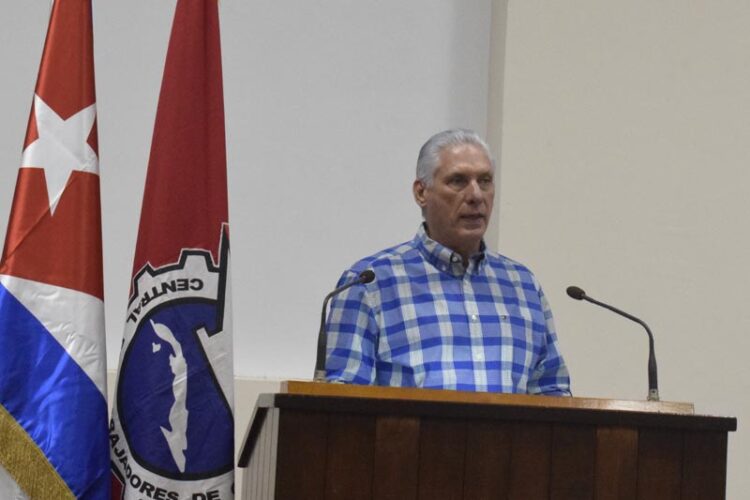
He began his speech by congratulating the people and workers of Pinar del Río, the venue of the central activities for July 26, as well as Matanzas and Villa Clara, which received the distinctions of Outstanding and Recognition, and Sancti Spíritus and Guantánamo.
The spirit of this congress multiplies revolutionary energy and could not have been held at a more opportune moment, although atypical in terms of the number of delegates and its duration, because the country’s economic and energy situation demands maximum rationality in the use of resources. “But it had to be held,” he emphasized.
He highlighted that Cuba is living through difficult times and that the CTC, whose main representatives have voice and vote because this is a socialist society where workers rule, plays a decisive role in the tasks of maintaining the Revolution and advancing the economy.
Moments before his heartfelt words about the reality the country is experiencing and the role revolutionaries must play in this society, the new National Secretariat of the union organization was announced, to be led by Osnay Miguel Colina Rodríguez.
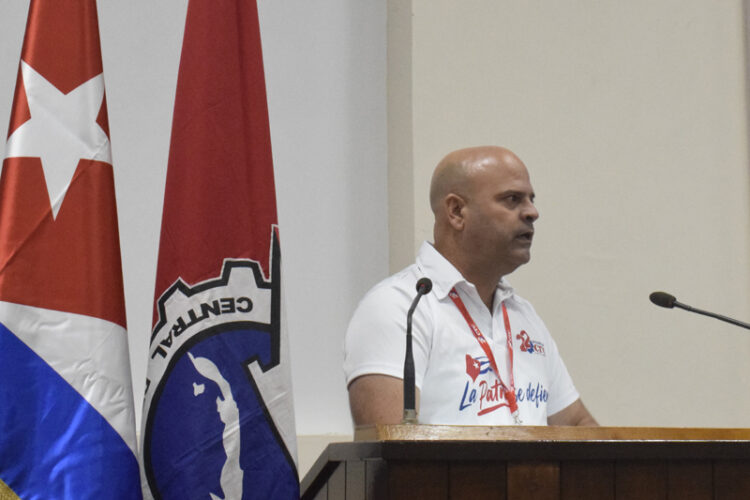
In his first words in office, he stressed that these have been very intense days and, beyond the responsibility assumed, he expressed gratitude to the leadership of the Party and the Government, which, amid such difficult conditions and economic limitations, bravely ensured that workers could hold their congress, in which “they demonstrated their support for the recently approved economic and social transformations and for the leadership of the Party and Government, which are our present and future.”
On a personal note, given the responsibility assumed, he sent greetings to Army General Raúl Castro, “always attentive to Cuban workers and to what they are capable of undertaking so that the Revolution grows.”
The national executive secretariat is made up of 13 members, elected for their personal qualities and experience in union leadership at the grassroots level.
For the organizational sphere, Ekaterina Gowen Dickinson was selected, while the professional posts were assigned as follows: Labor and Social Affairs, Lidier Águila Machado; Education and Propaganda, Yaisel Osvaldo Pierre Terry; Economic Affairs, José Antonio Pérez Pérez; and International Relations, Santiago Badía González.
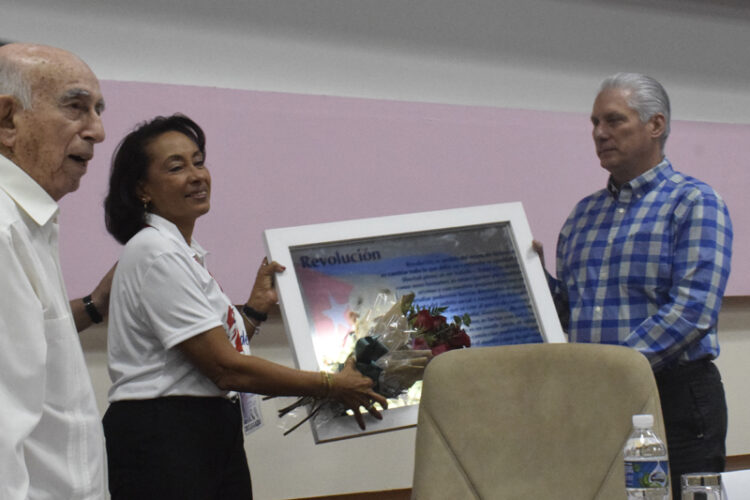
As non-professionals, several provincial and union general secretaries and union bureau leaders were elected: William Licourt González; Yuditza Sarmiento; Misael Rodríguez Yánez; Yaditza Díaz Martínez; Yamisleidy Verdecia Montero; Liz López González; and Caridad García Peña.
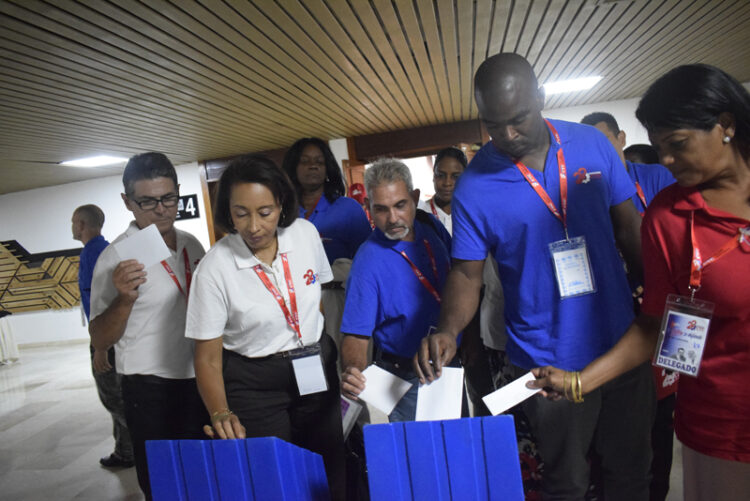
Previously, the new National Council of the CTC was announced by Lianet León, president of the electoral commission.
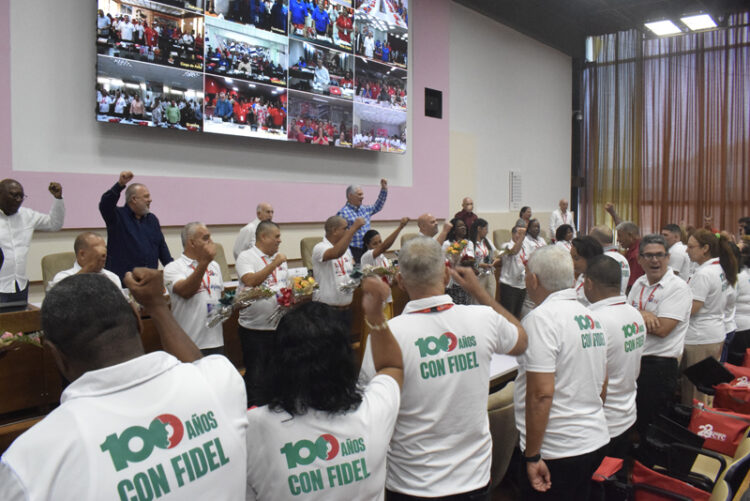
Of the 740 delegates present, 739 votes were valid. 99.5% of voters supported the full slate of candidates, and all those elected received more than 50% of the votes, she specified.
