


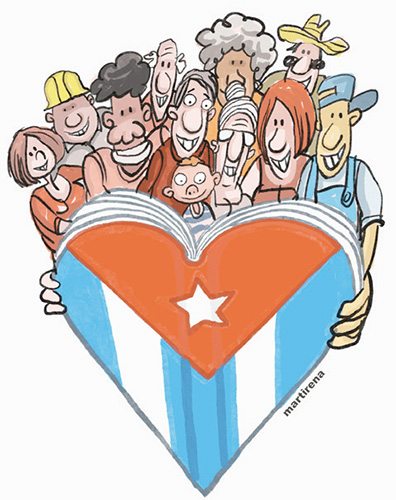
«How long will the hatred among ourselves last? Cuba is one, and each person loves it in their own way, but we must respect each other,» I heard a woman, not older than 60, say while standing in line for bread, as she commented on the insults and digital quarrels seen on social media between some children of this land who emigrated and those who decide to remain here, enduring blackouts, shortages, and all the daily hardships.
No one holds absolute truths, but rather feelings shaped by their education, culture, and professional aspirations. Personal experiences rarely resemble one another and guide life decisions, but from there to disrespect and the savage cannibalism of wishing for, supporting, or even calling for military interventions in the country that shelters your family and friends is a long stretch.
And every time we say division is ideological, I remember Frei Betto: “Ideology is the pair of glasses that each of us, without exception in the world, has behind our eyes.” Sadly, those glasses are sometimes clouded by an induced myopia from hegemonic communication systems that blind reasoning and damage relationships simply because, instead of persuading and listening, they resort to imposition and radicalism. Thinking differently is logical. Understanding that difference in every act of life without judging should also be logical.
We have all made mistakes. And of course, governments and their leaders too. Taking facts, names, or processes out of their historical context to analyze them in 2026 always risks being unfair and partial. But the Revolution—with a capital R—lived in Cuban society after 1959 is indisputable and not mere rhetoric. On a balanced scale, the correlation of benefits, social justice, and transformations is immense.
That there is bureaucracy, that many things can be changed, that we are suffocated by daily economics and inflation, that we need more secure solutions for everyday problems, and that we all have more questions about the future—this is true.
The solution lies only among Cubans. Not by appealing to third parties, and even less to the U.S. government. Not by hating, nor by supporting terror campaigns, nor by calling people to the streets that they themselves never took. Today, the dictionary of Cuban identity carries one meaning: to love the homeland, the nation. Everything else is just empty talk.


