

The celebration of the 22nd Congress of the Workers’ Central Union of Cuba ([su_tooltip title=»Central de Trabajadores de Cuba (CTC)» text=»The CTC (Workers’ Central Union of Cuba) was founded on January 28, 1939 by Lázaro Peña under the name Confederación de Trabajadores de Cuba (Confederation of Cuban Workers)» background=»#fa9800″]CTC[/su_tooltip]), scheduled for mid-2026, will not only represent a significant milestone in the history of the Cuban labor movement, but also a resounding demonstration that, despite the U.S. blockade and the adversities imposed by the government of the United States, the Cuban Revolution continues to advance without being paralyzed, as many of its detractors predicted.
This event will focus, first and foremost, on the defense of the achievements of the Revolution and socialism, as well as on labor rights, social justice, and the search for solutions to the challenges currently facing the Cuban economy.

A Congress in a Challenging Context
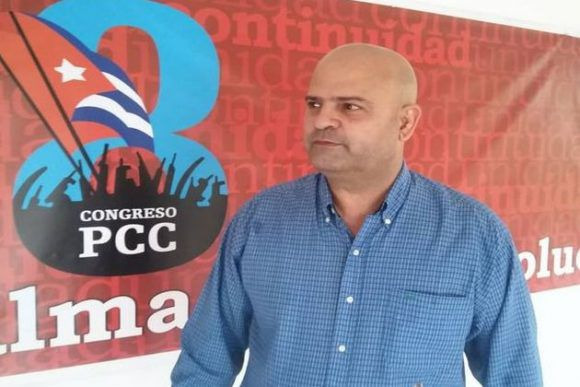
Osnay Miguel Colina Rodríguez, member of the Central Committee of the Party and president of the Organizing Commission of the conclave, emphasized the relevance of this congress by stating: “We are in the year of the congress and, under the most rational formula possible, given the difficult conditions imposed by that cruel and fascist government of the United States, with its energy blockade, we are considering how to carry it out with the premise that we are going to win.” This declaration highlights the determination of the labor movement and the people to confront the challenges arising from the intensification of hostile U.S. policies, reaffirming their commitment to building a more just and equitable society.
Founded in 1939, the [su_tooltip title=»Central de Trabajadores de Cuba (CTC)» text=»The CTC (Workers’ Central Union of Cuba) was founded on January 28, 1939 by Lázaro Peña under the name Confederación de Trabajadores de Cuba (Confederation of Cuban Workers)» background=»#fa9800″]CTC[/su_tooltip] is the result of a long process of struggle for unity within the Cuban labor movement, bringing workers together around the goals of social justice, freedom, and independence. Throughout its history, it has been a bulwark in the defense of labor rights and a firm voice in the fight for workers’ dignity, which will be evident in the congress discussions.
Key Issues on the Agenda
The 22nd Congress of the [su_tooltip title=»Central de Trabajadores de Cuba (CTC)» text=»The CTC (Workers’ Central Union of Cuba) was founded on January 28, 1939 by Lázaro Peña under the name Confederación de Trabajadores de Cuba (Confederation of Cuban Workers)» background=»#fa9800″]CTC[/su_tooltip] will address issues of great importance for the future of Cuban society. Among them are legal, material, and spiritual guarantees for the real exercise of trade union freedom within the framework of current and necessary economic, political, and social transformations.
One of the central points of debate will be energy savings, a crucial issue given the current energy crisis facing the country. The labor community is called upon to contribute creative and sustainable solutions to this problem. In addition, import substitution and export development will be discussed—vital aspects for ensuring economic sovereignty and strengthening Cuba’s productive system.
The [su_tooltip title=»Central de Trabajadores de Cuba (CTC)» text=»The CTC (Workers’ Central Union of Cuba) was founded on January 28, 1939 by Lázaro Peña under the name Confederación de Trabajadores de Cuba (Confederation of Cuban Workers)» background=»#fa9800″]CTC[/su_tooltip] positions itself as a key actor in the economic, political, and social life of the country. The congress will be a space to analyze the labor code, worker affiliation to union sections, and the review of statutes governing union activity in Cuba. Active participation of unions in all spheres is essential to ensure that workers’ interests are adequately represented and defended.
Other vital issues to be addressed include social security, saving material and financial resources, the functioning of affiliate assemblies, work organization, and occupational health and safety—all of which take on greater importance given the intensification of the blockade. The congress will also serve to analyze and propose concrete actions to strengthen the permanence and promotion of workers within Cuba’s labor system.
Collective Bargaining Agreements will be another key topic, fundamental for realizing trade union freedom and establishing parameters that raise productivity and efficiency in workplaces. In a climate of growing diversity in forms of labor management, it is imperative that the labor movement adjust its work to the current reality of employment in Cuba.

Innovation and the Role of Women and Youth
Success stories, challenges, and initiatives supporting industry and services—such as those promoted by the National Association of Innovators and Rationalizers ([su_tooltip title=»ANIR» text=»Asociación Nacional de Innovadores y Racionalizadores (Spanish).
Association created in Cuba in 1981 with the aim of promoting and guiding the creative initiative of Cuban workers» background=»#fa9800″]ANIR[/su_tooltip]), created in the 1960s—will also be part of the debates. This movement highlights the importance of linking workers with science and technology in workplaces, contributing to innovation and continuous improvement of production processes.
The role of women and youth in the labor sphere will also be relevant in the discussions. Their rights to employment and active participation in the country’s economy will be addressed, ensuring their voices are heard and their needs met. Wage challenges and the need to strengthen a more just and equitable society will be recurring themes, reflecting the essence of the Cuban Revolution and its achievements in economic, social, and cultural rights.

A Critical and Self-Critical Congress
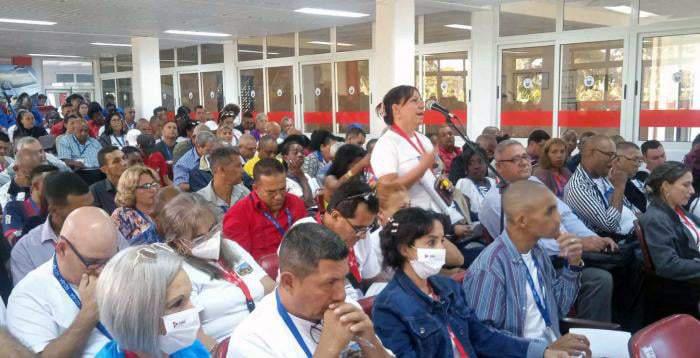
The 22nd Congress of the [su_tooltip title=»Central de Trabajadores de Cuba (CTC)» text=»The CTC (Workers’ Central Union of Cuba) was founded on January 28, 1939 by Lázaro Peña under the name Confederación de Trabajadores de Cuba (Confederation of Cuban Workers)» background=»#fa9800″]CTC[/su_tooltip] is destined to be not only critical and self-critical, but also decisive for the future of the Cuban labor movement. The structure of the [su_tooltip title=»Central de Trabajadores de Cuba (CTC)» text=»The CTC (Workers’ Central Union of Cuba) was founded on January 28, 1939 by Lázaro Peña under the name Confederación de Trabajadores de Cuba (Confederation of Cuban Workers)» background=»#fa9800″]CTC[/su_tooltip]—which includes the Congress, National Council, National Committee, National Secretariat, national and provincial unions, committees, union bureaus, and union sections—allows for broad representation of the working class. With more than two million workers affiliated to 18 national unions, this mass organization stands as a reference in defending labor rights and promoting an inclusive society.


The importance of this congress transcends the union sphere and becomes a symbol of resistance. As delegates prepare to participate, whether in person or virtually, the echo of past and present struggles will resonate strongly. The proposals and actions resulting from this meeting will not only shape the course of the labor movement, but also contribute to the defense and strengthening of the Cuban Revolution, reaffirming the idea that the struggle for workers’ rights is, ultimately, a struggle for sovereignty, dignity, and the future of the homeland.
Thus, the 22nd Congress of the [su_tooltip title=»Central de Trabajadores de Cuba (CTC)» text=»The CTC (Workers’ Central Union of Cuba) was founded on January 28, 1939 by Lázaro Peña under the name Confederación de Trabajadores de Cuba (Confederation of Cuban Workers)» background=»#fa9800″]CTC[/su_tooltip], under the slogan “For Cuba, together we create”, will be an unparalleled opportunity for Cuban workers to reaffirm their commitment to the Revolution and socialism, while confronting current challenges and charting a path forward. Unity, struggle, and hope will be the foundations of this event, in which it will be ratified that, despite the adversities imposed by the blockade, Cuba remains standing, building a better future for all its citizens.


