

We often attribute solely to the business sector the ability to drive economic activities that increase the production and services offered to citizens and national entities.
While it’s true that part of the budgeted sector has already ventured into certain self-financing schemes to supplement the financial resources provided by the State (the so-called budgeted units with special treatment), there isn’t always the same level of understanding or initiative within certain social and professional organizations.

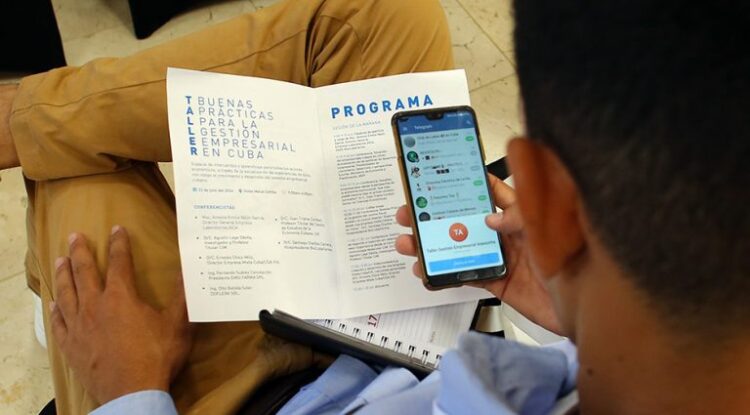
In particular, the Cuban trade union movement—with its single Central, the 15 unions that comprise it, plus Anir—has gone through various phases in terms of economic and financial management, with periods of greater or lesser development. But what is clear is that a large and complex organization like ours can aspire to much more in terms of increasing its income.
The idea of a business model for social, professional, and mass organizations should be on the radar of their leaders and members, as a way to reduce the burden of state subsidies received from the national budget, and also to improve the living and working conditions of their staff and leadership.
This is not about abandoning their core mission or character, but rather about setting a socially useful example, aligned with the oft-repeated conviction in speeches that the economy must be the top priority of all political and ideological work in our country.
In the specific case of the trade union movement, practices such as space rentals, lodging services for third parties, and the sale of agricultural products grown on farms, patios, and plots—or other uses of existing infrastructure—are already quite common.
But it wouldn’t be far-fetched to consider other ways of generating income more closely tied to professional services, based on the potential of their members or the social purpose of their departments, which could make more substantial and specialized contributions.
The newspaper Trabajadores, for example, has already begun transforming its editorial and economic management model, as part of an initiative for Cuban media outlets promoted by Upec and strongly supported by the Party.
An appealing portfolio of services related to social communication—also a national priority—is part of this strategy aimed at supplementing financial resources, stabilizing and attracting professionals, and ultimately improving the quality of journalism.
The key to making this kind of change work and succeed lies first in the motivation of the collectives and the leadership of their directors, along with the creation of legal and oversight frameworks that remove obstacles and allow for transparent and participatory performance.
Of course, many mindsets will need to change along the way, and various forms of resistance must be overcome—both from those who must lead the shift and from regulatory bodies and government agencies at different levels. Without a doubt, this is an experience worth pursuing with the seriousness and urgency demanded by the difficult times facing the Cuban economy, where there is no other option but to equip ourselves, whenever possible, with a solid business model.


