

The changes proposed in the Preliminary Draft of the Labor Code, which all Cuban workers will study and debate starting in September, are so significant that most experts agree this isn’t just an update to the current law—it’s a completely new law.

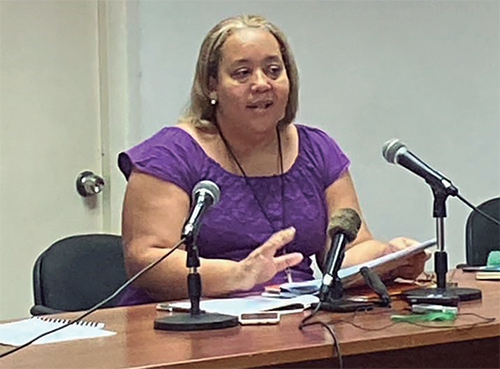
This was confirmed by Olgalidi Alapón Travieso, an expert from the Legal and International Relations Department of the Ministry of Labor and Social Security (MTSS). She spoke with Trabajadores newspaper about the main innovations and features of the upcoming legal provision, which will be submitted for public consultation from September to November.
“It is a new Labor Code that updates and improves the regulations guaranteeing the protection of rights and the fulfillment of duties arising from the individual legal-labor relationship between workers and employers, regardless of the sector in which they work,” stated Olgalidi Alapón Travieso.
The official explained that the Code will establish judicial, institutional, and union mechanisms to enforce those rights and duties. It will also develop provisions related to collective labor relations, through effective worker participation and collective bargaining.
The draft is the result of contributions from a temporary working group composed of representatives from government bodies, organizations, labor law specialists, university professors, employers, and union leaders. They identified the issues that needed to be modified, incorporated, or updated.
Additionally—Alapón Travieso clarified—the group studied comparative legislation from 17 countries, the 90 international conventions ratified by Cuba, the declarations of the International Labour Organization regarding fundamental principles and rights at work, and the Convention on the Elimination of All Forms of Discrimination Against Women.
The official emphasized the need for a new Labor Code following the promulgation of the Constitution of the Republic of Cuba in 2019, which introduced labor-related principles that are now being developed in this legal framework. These updates also reflect agreements in other guiding political documents, recent economic transformations, and newly enacted laws.
Among the most innovative aspects, the expert highlighted that the upcoming Labor Code will apply to all workers, regardless of the sector in which they work, and to any employer, including non-state management forms, which will be required to comply with the legislation.
As specific details, Alapón Travieso cited:
- The change in the minimum age for employment from 17 to 18 years.
- The prohibition of fixed-term contracts for jobs that are permanent in nature.
- The ban on employers terminating employment due to pregnancy, or conditioning hiring, retention, or promotion of female workers based on their pregnancy status.
Another new measure will be to replace the principle of demonstrated suitability with that of demonstrated capability for hiring, continued employment, promotion to another position, training, and professional development. “This reflects a competency-based management approach aimed at achieving superior performance,” it was noted.
Other proposals include establishing guidelines for employers to ensure access, mobility, and development for people with disabilities; the right to use remote work or telecommuting whenever possible, especially in cases involving personal circumstances such as caring for dependent family members.
The Code also proposes changes to the procedure for assigning recent graduates and fulfilling social service obligations, as well as requiring employers—including those in the non-state sector—to protect workers’ income in the event of job interruptions or termination of employment.
“The employer’s decisions are made in agreement with the labor union, and major decisions are discussed and approved in the general assembly of members and workers, which serves as the highest body of the union and a space for active participation,” it was stated.
One of the potentially controversial topics could be related to salary increases, due to existing expectations, the specialist anticipated. “Regarding wages, the Code defines the components of remuneration, the protection of the minimum wage, the principles that approved wage systems must follow, as well as the guarantees and conditions of payment,” she concluded.


